
Hydra collecting for citizen scientists
Callen Hyland, Kimberly Sladek
Abstract
The freshwater cnidarian Hydra has been a model system for regeneration and developmental biology for over 250 years, but much remains unknown about their biodiversity and global distribution. As a citizen scientist, you can contribute to our understanding of Hydra in the wild by becoming a "Hydra Hunter". All it takes is a few simple materials and a little patience.
Collecting Hydra in the wild can be challenging. You will certainly not find them everywhere you look. Keep in mind that NOT finding Hydra is still useful information because this will help us understand the environmental factors that effect their distribution.
Metadata submission form: http://forms.gle/cAZCiiRCyE922G5t5
Please contact callen dot hyland at gmail dot com for more information or to receive a Hydra collecting kit.
Hydra collecting kits were purchased with a grant to Kimberly Sladek from the University of San Diego Associated Students Government.
Thank you to Rob Steele for helpful feedback on this protocol.
References:
Campbell, R. D. (1983). Hydra Collecting. In H. M. Lenhoff (Ed.). Hydra: Research Methods . New York: Springer Science + Business Media.
Martínez, D. E., et al. (2010). Phylogeny and biogeography of Hydra (Cnidaria: Hydridae) using mitochondrial and nuclear DNA sequence. Molecular Phylogenetics and Evolution, 57 , 403-410. doi:10.1016/j.ympev.2010.06.016
Before start
Make sure you have all collecting equipment and are prepared for a day outside in the field.
Familiarize yourself with the metadata submission form so you know what to keep track of when you are in the field.
If it will be a long walk to get to the collecting site, bring water, sunblock, and appropriate clothing for changing weather conditions. Be cautions around fast flowing streams, deep water, and slippery rocks.
Research your collecting s before starting. Avoid private property and restricted areas. Respect the environment by avoiding sensitive habitats and by disturbing vegetation and wildlife as little as possible.
Steps
Gather your materials:
- Notebook and pen
- White or clear plastic container (a medium-sized food storage container is ideal)
- Glass Pasteur pipette + rubber bulb
- Screw-cap vials (either glass or plastic)
- Magnifying glass, high powered reading glasses, or headband magnifier
- Optional: plastic toothbrush holder to protect your glass pipettes
The Hydra Collecting Kit contains:
- Plastic food storage container
- Two glass Pasteur pipettes + one rubber bulb
- Credit card-sized magnifying glass
- Three glass screw-cap vials
Familiarize yourself with the appearance and anatomy of Hydra so you know what you are looking for.
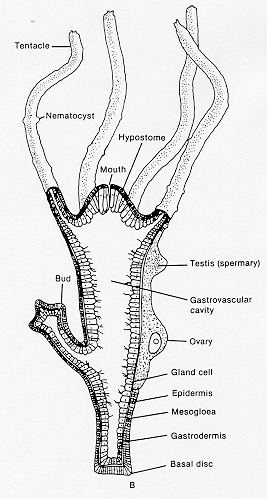
Select your collecting .
Hydra are found in fresh water bodies all over the world. Look for ponds, lakes, rivers, and streams with accessible shoreline. Especially promising areas will have slowly moving water, abundant small invertebrates, and water plants to which Hydra can attach.


Once you are at the collecting site, record metadata about the environment:
- Name of the
- GPS coordinates
- Date and time
- Brief description of the
- Any wildlife observed
- Human activity observed
- Description of the weather including air and water temperature. You can measure it if you have a thermometer, otherwise provide an estimate.
Note
To find your GPS coordinates you can drop a pin on your using Google Maps, use the iPhone Compass app, or use a dedicated GPS smartphone app.
You can access the metadata submission form with your device and fill it out while you are in the field, or you can write everything down in your notebook and fill out the form when you get home.
http://forms.gle/cAZCiiRCyE922G5t5
Hydra attach to submerged surfaces (rocks, sticks, leaves, reeds, stems of water plants, shells) through their basal disk, so this is likely where you will find them in the water. Fill your plastic container with water, then pick up various items from the water and place them in your container. Use your magnifier to examine every side looking for Hydra. If there are none, put the items back into the water and repeat.


Hydra can be difficult to spot since they are less than a centimeter long. It can be especially challenging if there is algae on the surfaces you are examining. Here are some tips for what to look for. Add a comment if you have additional suggestions.
-
Hydra may be extended or contracted. If extended you will notice the cylindrical body column. If contracted, they will appear spherical on the surface of the item you are examining. Either way, they will look more "geometrical" than the surrounding algae and debris.
-
Look for fine tentacles extending up into the water column.
-
Hydra can be either green or brown. In the author's experience, green Hydra are much darker green than surrounding algae and aquatic plants. Brown Hydra look tan or translucent.

Did you find Hydra? If so, use the Pasteur pipette to fill a vial with water, then use the Pasteur pipette to scrape the Hydras off the surface and then suck them up and transfer them to the vial. Cap the vial leaving a small amount to air.
Record the number of Hydra you found at that .

Make sure to fill out the metadata submission form for every site you visit. Fill out a separate form for each site, even places where you did not find Hydra (under "number of Hydra found" record 0 if you did not find any). http://forms.gle/cAZCiiRCyE922G5t5
If you collected Hydra, contact callen dot hyland at gmail dot com for the next steps.

